sidney barnes
Sidney Barnes is a choreographer, artist and dancer. He lives and works between London and Brussels. In 2016 he graduated from the training cycle at PARTS and in 2023 completed a second degree in Psychosocial studies from Birkbeck (University College London). Between 2021-23 Sidney was a member of CONDITIONS an alternative fine art MA in Croydon south London.
Traversing through roles; as performer, interlocutor, rehearsal direction and outside eye, Sidney has worked for choreographers including Marten Spångberg, Ula Sickle, Sung Im-Her, Eszter Salamon and Liza Baliasnaja.
Sid uses choreography as an activating and organising craft between various media such as image, sound, music, text, voice, bodily movement and dance. He considers the choreographic as a catachrestic term, meaning its use is always formulated on some kind of abuse. Choreography happens at the moment procedures are bastardised. The negativity of misusing it, is precisely what opens its doors for inquiry.
The Experimental
>The experimental< is a research project about the experience of experimentality. The work is made up of a series of speculations, manifesting into performance and text. Each constituent practice concerns an exploration into the consistency of experimental time(ing). Experimental temporality is a certain gauge with in experience, leading to unexpected outcomes and disruptive relations. It is at once a period of time, a method, a way of being and a descriptive attribute. I am concerned with an experimentality that destabilises, a form of mentality that induces collision, friction and conflict toward the established. As a focus, I have been working with dance and the archive, using the fertile past to experiment with performative time. I began working on a series of reenactments, that place the body into multiple contextual histories. Displacing the present through intervening into the past, I engage with an embodiment practice that falsifies past physicality, re-articulating specific components of works, manifesting them partially into new futures. This mode of working attempts to unfix a singularised notion of an original work, locked or held in the past. The ‘original’ rather contains a reservoir of possible futures. I work creatively with this supply of dance history, to transit works across time.
‘without history, experimentation would remain undetermined, unconditioned […] yet history cannot but be seen as a set of negative conditions which enable experimentation as a product of something new’
So experimental time is dependant upon historical time, or the time just before, the changing feeling of a time lived. The ground slips away from the feet slightly, a time in which to spend ambivalently, and to witness an end that doesn’t end but rather reserves possibilities for other ends to come. Reenactment work is a type of experimental time, it holds on, prolonging resolution, holding the end in suspension. This might also be understood as resonance, what is left hanging in the air, the vibrations of gesture or performativity.


Portrait 1: Reenactment of Mary Wigman

Portrait 2: Reenactment of Steve Paxton
Jouissance (baroque-midi)
>>Jouissance (baroque-midi)<< is a dance work of postponement, a dance that situates itself in the longevity of foreplay. Transitioning through a series of quasi-pleasurable positions or dances or actions, alone or auto-erotic, it attempts to work-through an abundant climax, edging continuously on the excessive. Foreplay is time prescribed before an event, a certain maintenance of the pre-emptive, an accidental prelude. Making its way along a slippery crescendo, deferring any outcome, >>Jouissance<< pivots continuously on itself whilst constantly transgressing its pivot. Lingering in fore-pleasure, dance becomes unclear in its measure of value. A powerful gush, a choking of continuous jubilation, an excess of movement pleasure that is lodged in the throat and reels into bliss. The extremity of dancing becomes almost intolerable, for Jouissance, it occurs outside any measure of value or idea of a threshold.
>>Jouissance (baroque-midi)<< is untranslatable, the English language fails to render possible a word for a form of pleasure that delicately balances on the edge of excess. Departing from this translational failure, in his first solo work, Sidney’s desire to understand Jouissance is that which drives the creation, a desire which he has accepted is intrinsically impossible. He dances alongside, with, and inside the word, although alone, Jouissance is never in solitude, and always implies a relation to something other. The dance of bliss does not adhere to a singular climax, but rather develops in an extended interval of leisurely enjoyment, a complex economy of attention and distraction.
Sidney dances to become an object to himself, powered by a constant renewal, a straying from oneself, a straying in such a way that one is sent back to a self beyond any possible identity. It is something like suffering, the abandonment of a subject capable of saying ‘I’ an arrival to a limit that can only be surpassed… for such a place is unbearable to think of.
Set to an original score, the music composition program Ableton becomes a choreographic canvas, projecting text, Christian iconography and selected works by Gian Lorenzo Bernini. These images have been converted into Midi files, producing a landscape of experimental electronic music.


Nothing Gained
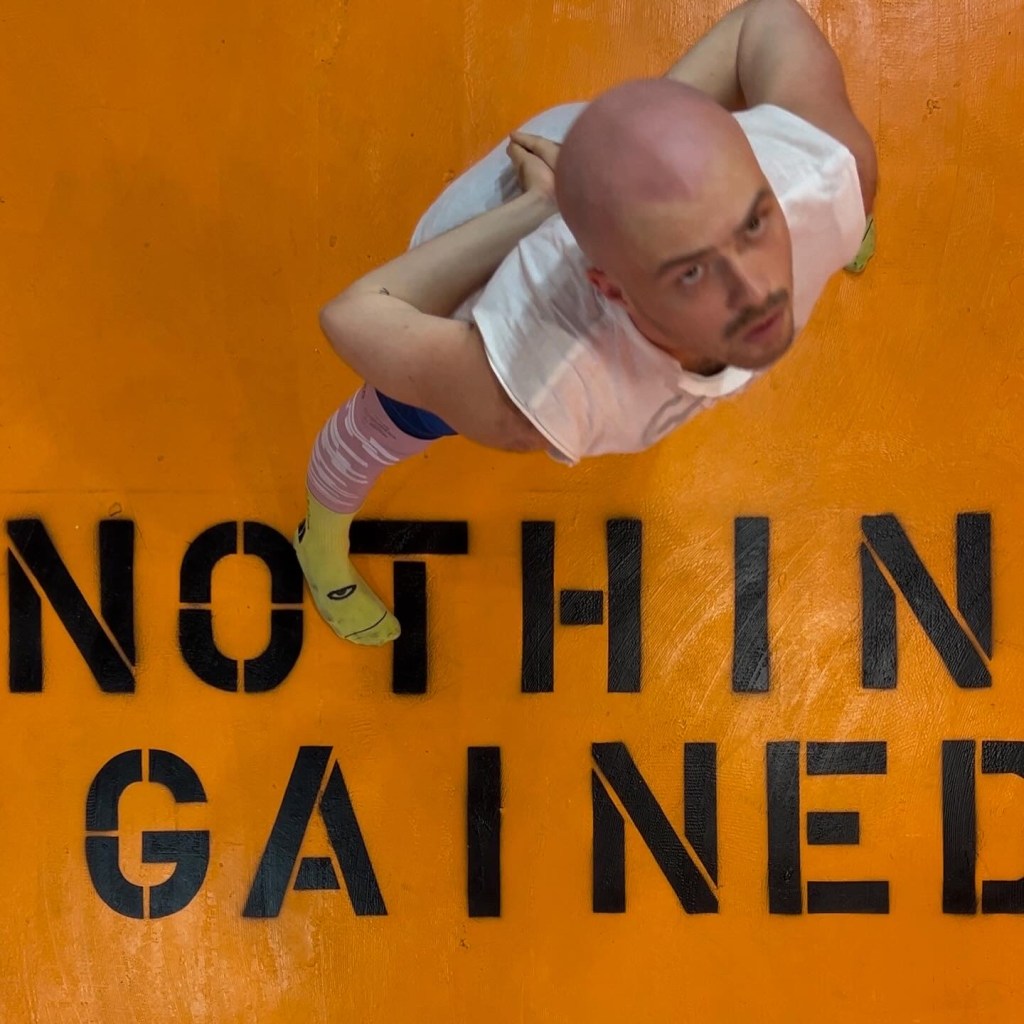
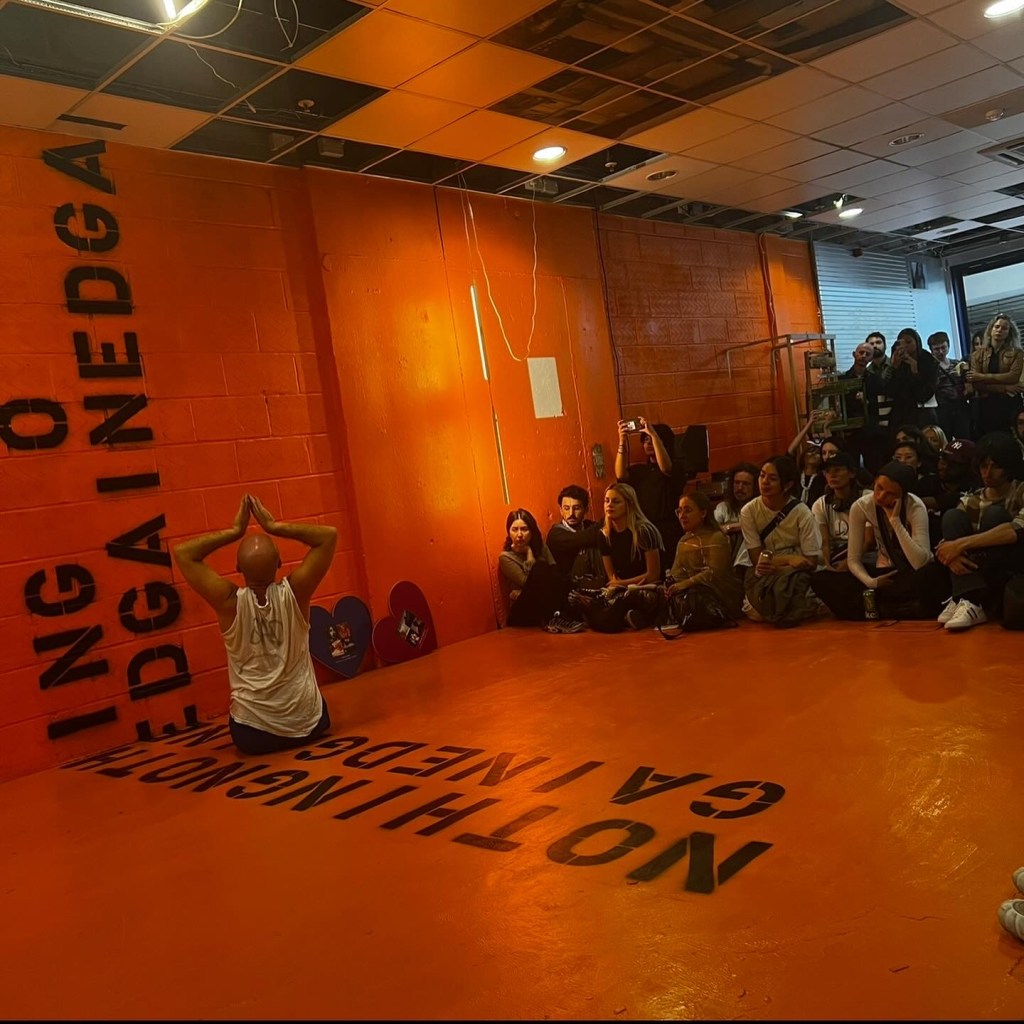
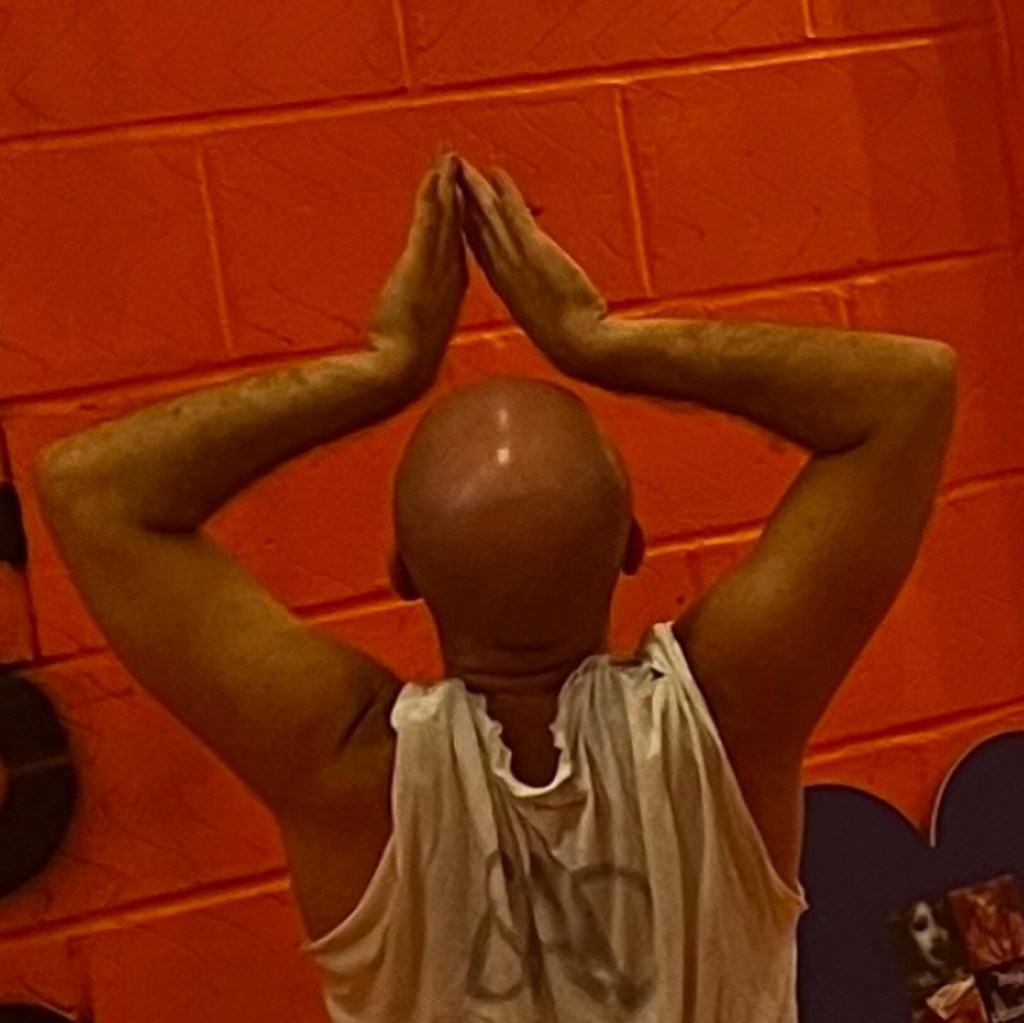
Nothing Gained ventures aimlessly into the death drive, a faculty upon which past, future and present entwine. What seems to be out front, the future, comes back in advance, from the past, from the back. This work is a proposition to engage the death drive into the confines of a dance work. This impossible desire, to stay with the death drive, stems from a critique of common hope or a common trope, the wish to do away with Thanatos, as that which must be surpassed or transgressed in order to build a better life for all. Any futurity imagined depends upon a structuring body, a system, or choreography, that already contains within it the propensity for its own wreckage. Order as such may be inseparable from what disturbs it, that the law of order always contains, in both senses of the word, the spectre of its own undoing which is conjured to help it survive.
The zero like a stutter, or a broken record, makes what it keeps repeating worthless and meaningless, offering nothing to please anyone. Anxiety and enjoyment together makes ‘enjiety’ a combination of utter bliss and the anxiety which comes with such a blissful impossibility. Following such a design, the phrase has been built to remain unclear in its direction or object of choice. An algebraic situation envelops, with no credible formulae to figure it possible. Its not that it is without an object per-se, but rather driven by a resistance to realise an outcome, a finality or possibility of repair. What forms of optimistic attachment does dance propose to its onlooker? Here it is given no future, this work has no future, no means to go on, only deja-vu. ‘Have I been here before? where did it start? why or how did he end up here or there? ‘Nothing Gained’ is a dance for forgetting and remembering of not knowing what will come next and being taken in by the enjiety such sequencing upends.



 Sidney Barnes